
Arizona Bill Would Remove Speed Limits From Interstate Highways
Where does Sammy Hagar live these days?
A bill has been introduced in the Arizona legislature that would remove speed limits from certain stretches of interstate highways crossing the state.
The Reasonable and Prudent Interstate Driving Act, or RAPID Act, submitted by Republican Representative Nick Kupper would allow for the Arizona Department of Transportation to authorize “derestricted speed zones,” similar to how Germany’s Autobahn operates.
The rule would only be in effect during the day for non-commercial vehicles and a nighttime 80 mph limit would apply in the zones.
SEE IT: MAN DRIVES 196 MPH WITH CHRISTMAS TREE ON CORVETTE ZR1
“Most drivers can tell the difference between a crowded city freeway and a wide-open stretch of rural
interstate,” Representative Kupper said in a news release. “The RAPID Act accounts for that difference. It will let us raise speeds where it’s safe, keep tough penalties for reckless driving, and update our laws to reflect how people actually use these roads.”
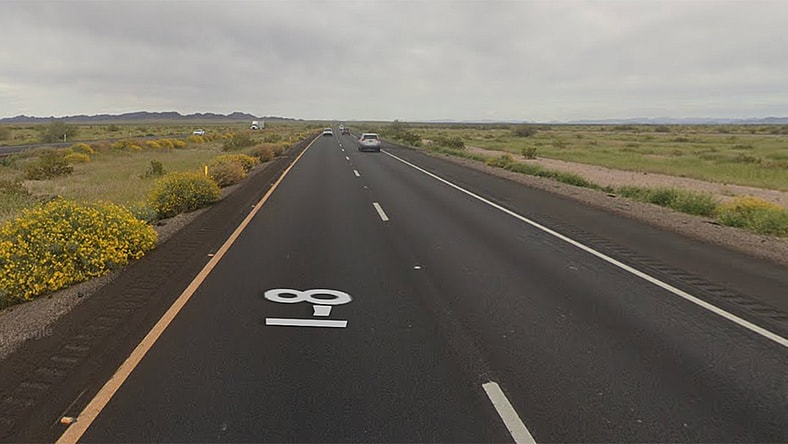
The bill calls for a one-year pilot project on a stretch of Interstate 8 located between Casa Grande and Yuma. Annual safety audits would be required for all of the derestricted speed zones.
LISTEN AND SUBSCRIBE TO THE GAS: AN AMERICAN CARS AND RACING PODCAST ON APPLE PODCASTS
Kupper noted Montana’s longstanding “reasonable and prudent” rule, which was in effect until 1999 when the state’s highway safety was similar to surrounding states. While the national 55 mph rule was in effect from 1974 to 1995, Montana charged a nominal $5 waste of natural resources fee for speeders to keep it technically compliant.
SUBSCRIBE TO THE FREE AMERICAN CARS AND RACING NEWSLETTER FOR MORE STORIES LIKE THIS
The current maximum speed limit in Arizona is 75 mph, while the highest in the nation is in Texas, where a section of State Highway 130 between Austin and San Antonio has an 85 mph limit. Kupper’s bill has not yet advanced in the legislature, which is in recess until Jan. 12.