
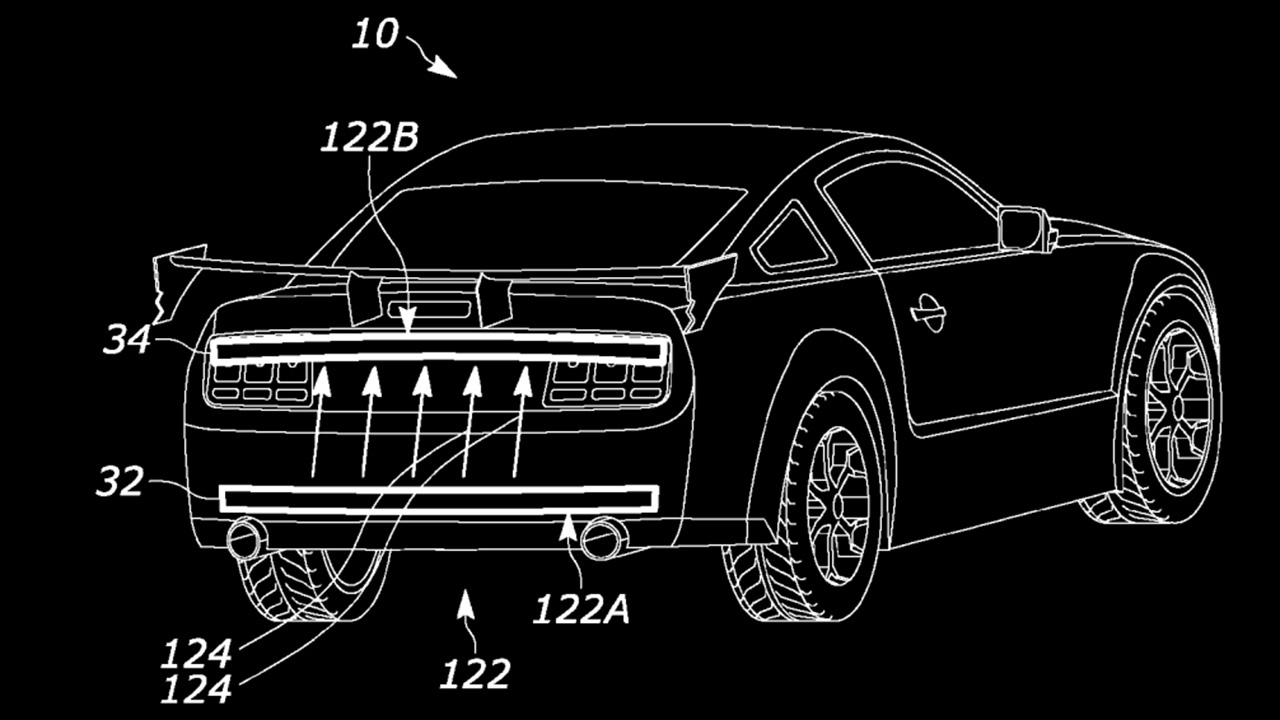
Ford has designed a futuristic way to manage airflow around a vehicle using electrical fields instead of moving parts like spoilers or flaps. The technology was revealed in a patent application for an “Active Ionic Propulsion System for Motor Vehicle,” which directs air using electrical charge.
Traditional active aerodynamics rely on the physical shape of a car to push air aside. This system adds a high-tech layer by using an ionic airflow management system that works through a process called corona discharge.
Inside the system, there are specialized electrodes built into electroluminescent strips of material that are attached directly into the car’s exterior components, such as the bumper, roof or rear wing.
When a high-voltage current from the power supply hits these electrodes, it strips electrons from the air molecules, turning them into charged “ions”. These ions are then pulled toward the opposite terminal. As they move, they collide with regular air molecules, creating an “ionic wind” that directs the air exactly where the car needs it to go.
FORD MAVERICK HYBRID AWD REVIEW: THE AFFORDABLE PICKUP GETS EVEN BETTER
As with movable wings and other aerodynamic elements, the system can switch between high and low downforce modes to improve either the vehicle’s handling performance or efficiency.

Ford hasn’t indicated it has any plans to put the system into production, but several of its models have featured active aerodynamics and reducing drag is a key factor to increasing range in electric vehicles.
Ford has dialed back several EV programs, but is still pursuing the powertrain technology around the world and has focused its U.S. efforts on the new low cost Universal Electric Vehicle platform that is scheduled to launch with a small pickup in 2027. The main goals of the UEV program are reducing weight and aerodynamic drag which will allow it to provide an acceptable driving range with the smallest possible battery pack. Ford hasn’t mentioned using an Active Ionic Propulsion System in the vehicle, but recently previewed how the model’s aerodynamic design is 15% to 30% more efficient than a conventional pickup’s.
SUBSCRIBE AND LISTEN TO THE GAS: AN AMERICAN CARS AND RACING PODCAST ON YOUR FAVORITE PLATFORM


